It feels far longer than a week that I've been in Germany. Technically, I have: my parents and I arrived last Wednesday, so it's only really that I've been Germany on my own for a week. But that isn't what I meant. Saying that it's only a week since I said goodbye to my parents just feels wrong. Surely it can't have been so recently?
I've spent my first week alone in Germany working on my book, exploring Tübingen (pictures below!), going for jogs (admittedly only two), having awkward conversations with flatmates I barely know in the kitchen, setting up a German bank account, handing in forms, and Skyping numerous people, numerous times. I definitely feel like I'm settling in; like I'm getting to know my surroundings and life here is a little more normal.
Sunday, 25 September 2016

Saturday, 17 September 2016
Year Abroad, Part Two: Travel, Arrival and Settling In
So. I'm in Germany. My parents have just left; I'm here to stay now. What a weird thought that is.
Today is Saturday. We set off at perhaps twenty to three on Wednesday afternoon, and reached the Euro Tunnel in plenty of time - only for it to be delayed. After waiting there for a couple of hours, we finally got to France and had soon found our Ibis Budget hotel. It was clean and comfortable enough, but I didn't sleep well. Not because I was nervous, though - I was determinedly not thinking about where we were going. Apparently I just wasn't tired enough once my head hit the pillow, and once I did manage to sleep, I was woken twice during the night.
We set off again at about six AM French time, and I napped (badly) through France, Belgium, and Luxembourg. Once in Germany, though, I decided to stay awake despite still being tired: I wanted to see where we were going. At that point, I was quite excited. But the closer we got to Tübingen, the more nervous I got. What if I didn't like it? What if it wasn't a nice town? And did I really want to go away on a year abroad anyway? (The answer to that was no, I didn't.) I just wanted for us to keep on driving, as if we were just going on a trip through Europe, not dropping me off on my year abroad.
Monday, 12 September 2016
Year Abroad, Part One: Preparation
Since I got back from my family holiday in Italy, I haven't been writing as much as I'd have liked. I've been busy. But not in the usual way. My year abroad has come around rather fast and I've suddenly realised there's quite a lot I still have to do to prepare for it.
I'm spending my year abroad studying, in Tübingen, Germany. I leave in two days.
I'm spending my year abroad studying, in Tübingen, Germany. I leave in two days.
Wednesday, 7 September 2016
Writeometer: A Word-Count Tracking App
I find that NaNoWriMo gives me a certain motivation to write. Without it, I may write bits here and there, but there's a lot less dedication to my project. I'm never sure whether it's the idea of keeping up with the targets, or the idea that thousands of other people around the world are doing the exact same challenge, or both, that motivates me, but I've found that a smartphone app called Writeometer (I don't know about iOS, but it's free on Android!) has certainly helped motivate me to write more!

Writeometer does a similar thing to the NaNoWriMo website in that it tracks how much you write per day. You have more options when setting up your novel with Writeometer than on NaNoWriMo. For one thing, you're limited neither to one particular month, nor to 50,000 words. You can choose your total target word count, daily target word count, and when you want to finish your project by - or two of the three, and the app will calculate the third for you. There's also an option for continuing with an already started project, so you can input the number of words you've already written, and it'll use that as your starting point.


You can also choose when you would like Writeometer to remind you to write, and this is the main thing that has actually made me write these past few days. It's all well and good having an app to help you reach your writing goals, but you have to actually remember to use it! Without it, Writeometer would've been forgotten and I wouldn't have motivated myself to get past the scene I'd been struggling with.
To update your word count, you have to create a new entry in your writing log. You can choose whether to input how many words you've written since your last update, or to input your new total word count, and let the app work out how many words you've written. The "new log entry" page also lets you input how long you spent writing and add a note, which you could use to keep track of what you wrote when, how you felt about your writing, or something along those lines.


Then the app displays your data for you in nice graphs and charts, and in your project overview, so you can see all your stats and see how you're progressing.


And you can have multiple projects and inspirational writing quotes (provided by the app), too!

You might think this review/walkthrough is coming to a close (it's rather long as it is), but there are still more features that I haven't explored yet, including treats, the timer, and the toolbox. You may have noticed that the "new log entry" page had a "guavas" option, and this relates to the treats feature: when you feel you've written enough, you can assign yourself a guava, which you can redeem for real-life "treats" of your choice, which you can do right there and then. I don't use it, but can certainly see how helpful it could be for others.


The timer gives you 25 minutes to write, and is designed to get you to sit down, ignore all distractions, and get as much done as you can in the time limit. You can choose whether you'll be awarded with a guava at the end of the 25 minutes or not. And I thought all the above would be useful enough, but the toolbox offers even more extras with a word-of-the-day, a dictionary, a thesaurus, and a "word salad" feature designed to inspire.


Which leaves very little more (bar a word processor) that a writer would ever need!

Writeometer does a similar thing to the NaNoWriMo website in that it tracks how much you write per day. You have more options when setting up your novel with Writeometer than on NaNoWriMo. For one thing, you're limited neither to one particular month, nor to 50,000 words. You can choose your total target word count, daily target word count, and when you want to finish your project by - or two of the three, and the app will calculate the third for you. There's also an option for continuing with an already started project, so you can input the number of words you've already written, and it'll use that as your starting point.


You can also choose when you would like Writeometer to remind you to write, and this is the main thing that has actually made me write these past few days. It's all well and good having an app to help you reach your writing goals, but you have to actually remember to use it! Without it, Writeometer would've been forgotten and I wouldn't have motivated myself to get past the scene I'd been struggling with.
 |
| Writeometer reminds you of your daily writing goal |


Then the app displays your data for you in nice graphs and charts, and in your project overview, so you can see all your stats and see how you're progressing.


And you can have multiple projects and inspirational writing quotes (provided by the app), too!

You might think this review/walkthrough is coming to a close (it's rather long as it is), but there are still more features that I haven't explored yet, including treats, the timer, and the toolbox. You may have noticed that the "new log entry" page had a "guavas" option, and this relates to the treats feature: when you feel you've written enough, you can assign yourself a guava, which you can redeem for real-life "treats" of your choice, which you can do right there and then. I don't use it, but can certainly see how helpful it could be for others.


The timer gives you 25 minutes to write, and is designed to get you to sit down, ignore all distractions, and get as much done as you can in the time limit. You can choose whether you'll be awarded with a guava at the end of the 25 minutes or not. And I thought all the above would be useful enough, but the toolbox offers even more extras with a word-of-the-day, a dictionary, a thesaurus, and a "word salad" feature designed to inspire.


Which leaves very little more (bar a word processor) that a writer would ever need!
Tuesday, 23 August 2016
Midnight Never Come: Book Review
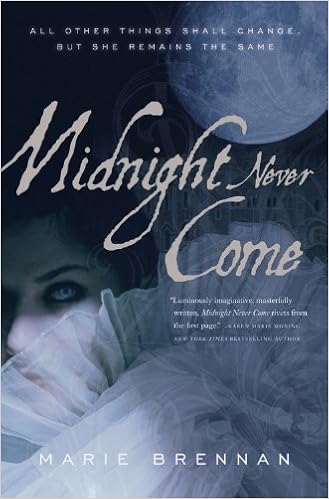 Midnight Never Come by Marie Brennan is a fantasy novel set primarily in London in the late 1500s, during the reign of Queen Elizabeth I - and also during the reign of another queen. Invidiana rules the not only the magical Onyx Hall which lies beneath London itself, but also all of faerie England. Our story follows two main characters - Michael Deven, a gentleman who seeks to better himself in the service of Queen Elizabeth, and Lune, a recently disgraced faerie Lady trying to win back the cruel Queen Invidiana's favour - and their discoveries concerning a pact, a curse, and the schemings of both fae and mortal politics.
Monday, 15 August 2016
The Lunar Chronicles: Book Review

So far I've only reviewed individual books but The Lunar Chronicles by Marissa Meyer is a completed series, including four novels, a prequel novella, and a collection of short stories, though I'll only be reviewing the novels. I suppose you'd class the series as science fiction, as it's set in the future and none of the plot would be possible without advanced technology, and it was because of this science fiction element that I was reluctant to read The Lunar Chronicles for quite a while. Eventually, though, I was swayed by the hype (and after all, I just can't resist fairy tale retellings).
The series focusses on Cinder, a cyborg mechanic who lives in New Beijing in the Eastern Commonwealth. Cinder's world is threatened by a deadly, incurable disease called letumosis - nicknamed 'the plague' - and by Queen Levana, the ruler of the Lunars, a moon colony of people with the ability to alter perceptions, who wishes to extend her control to Earth. Closer to home, Cinder dreams of escaping from her hateful stepmother to create her own life where she wouldn't be discriminated against for being a cyborg. But a strange twist of events leads Cinder to make some startling discoveries that (as cliched as it may sound) dramatically change Cinder's life forever.
As I mentioned previously. these are retellings of classic fairy tales, with each book focusing on a different one: Cinder is Cinderella, Scarlet is Little Red Riding Hood, Cress is Rapunzel, and Winter is Snow White. While this may make the plotlines of the individual books a little predictable, the story that Meyer creates in order to weave these stories together is rather original and wonderfully exciting. Each book also introduces a new protagonist, whom each book is named for, and who are incredibly unique and vivid. I think the characters are my favourite part of this series: they are extremely well developed, and Meyer's wonderful writing really makes them come alive. They're also all involved in some very cute romances - and not a single dreaded love triangle in sight!
Personally, I would say that Cress is my favourite of the four books - probably because she, a naive Lunar programmer with a huge imagination, may well be my favourite character; - but I do love all of them. Scarlet is probably my least favourite; it's a little slow and takes a while to get into, and it took me a little longer to bond with the main character - a tough and fiesty farmer/pilot from France. Compare that to Cinder, which had me hooked literally from the first line (a very good thing to do, in the first book in a series). What I really loved about Cinder - both the book, and the chapters written from her perspective throughout the series - was the unique point of view she has as a cyborg with interfaces in her brain. I can't help but think that her sections must have been really interesting (and fun!) to write.
Another thing I love about this series is the example it sets to the teenage girls who it is primarily aimed at (though that doesn't mean it can't be enjoyed by anyone of any age or gender). All our main characters are incredibly talented and are not restricted to stereotypically 'female' roles: Cinder, for example, is the best mechanic in New Beijing, and I've already mentioned the career choices of Scarlet and Cress. Meanwhile, Winter remains strong, brave, and incredibly cheerful while battling with mental illness (though admittedly Lunar Sickness isn't a mental illness that exists in the real world), but this aspect of her defines neither her personality nor her storyline. Also it's nice to see that the 'fairest in all the land' is a Black girl rather than one of the white models we're so used to seeing on magazine covers. So although some of these characters might be princesses, none of them are damsels in distress, and all of them are not only believable and lovable but also great role models.
In conclusion, I HIGHLY recommend the Lunar Chronicles to:
- anyone who loves fairy tale retellings
- anyone who likes science fiction
- anyone who loves books with characters that stay with you for years after you read them
- anyone who loves a nice, cute romantic subplot
- anyone who is looking for an exciting, enjoyable read.
Thursday, 11 August 2016
Adventures in Wales
Back in April (yes, this is how far behind my blog is), I went to Caernarfon in Wales for two nights with the Newcastle University Creative Writing Society. As part of the Creative Writing Society's committee, I helped to plan and organise the trip. We chose Caernarfon mostly because we found a nice hostel there that was available on the last-minute dates we wanted. (If anyone's interested, the hostel was Totters'; situated inside the walled town, it's a nice little hostel with very friendly and accommodating owners, and it was just what we were looking for) Caernarfon's main attraction is its castle, though it also boasts a beaches, a pretty town, and a Roman fort.


Once we arrived on the Thursday, we settled into the hostel, went for some food, then wandered around the shoreline until after it had gone dark, before returning to the hostel for some games.
In the morning on the Friday, we set off for the castle, a short walk from the hostel.

Admittance to the castle is £5.60 for students, but as a group of students, we got this discounted to £5 each. This admittance fee allows you to enter and leave the castle all day as you please, so there's no need to do everything at once; you can go to one of Caernarfon's cafes for lunch, and still come back to the castle without having to pay again. We then paid an extra £3 for a tour, which was informative, interesting, and definitely worth it. The tour does not cover all of the castle's large expanse, so there was still lots to explore once it had finished: towers, hidden passageways, exhibitions and displays... And of course plenty of photo opportunities!


We had a great day wandering both the town and the castle before returning to the hostel in the evening for more games and an attempted writing activity. Back when I was in my school's creative writing club, we had tried to write a story as a group, with each of us writing from one character's perspective, so I thought we could try something similar. Since Caernarfon castle has an interesting history involving a rebellion and two sieges, we decided to write on this theme. However, we didn't even get to the plot and character complications that come from having the input so many writers, which I encountered in my school's creative writing club: we barely even finished discussing ideas before we decided it was too late to write much. A writing activity like this needs more time than we had and definitely more planning, so that the group can spend more of it writing rather than brainstorming. It's something I'd like to try again - hopefully with more success next time!
All in all, it was a lovely few days, and we didn't even get to see all that Caernarfon has to offer! It would be great to go again and I definitely recommend both the town and the hostel.

Subscribe to:
Posts (Atom)