Showing posts with label books. Show all posts

Wednesday, 5 April 2017

Caraval: Book Review

Caraval by Stephanie Garber is a young adult fantasy novel concerning two sisters, Scarlett and Tella Dragna, and the magical annual performance, Caraval, where the audience get to participate in the show - or, more accurately, the game. Scarlett and Tella have been enchanted by the idea of Caraval and its mysterious ringleader, Master Legend, ever since their grandmother told them stories of it as children. But when they finally receive invitations to Caraval, just days before the event, Scarlett is just days away from marrying a man who promises both herself and her sister a secure future away from their abusive father. Going to Caraval would mean putting their future and their safety in jeopardy.

Tella, meanwhile, has other ideas. Despite the risk of missing the wedding, she tricks Scarlett into going with her to Caraval with the help of sailor Julian, before promptly disappearing upon arrival. Scarlett quickly realises Tella has been kidnapped by Legend himself: Tella's whereabouts is the mystery that this year's participants must solve to win the game. She vows to find her sister in time to return for her wedding, but soon discovers that Caraval is less harmless than she imagined. While it might just be a game, Scarlett cannot risk that it isn't, and that something sinister really is going to happen - or has already happened - to her sister. Not only must she figure out the clues that Legend has left for them, but also who to trust - including whether she can trust herself.


Wednesday, 29 March 2017

Elantris: Book Review

Elantris by Brandon Sanderson is a standalone fantasy novel set in the kingdom of Arelon, where the magical city of Elantris once ruled. But ten years ago, Elantris fell when its powerful magic failed, and its occupants, the Elantrians, changed from god-like beings to living corpses.

Now, Arelon's future is uncertain. King Iadon is leading the country to ruin, and High Priest Hrathen is determined for Arelon to be absorbed into the Fjordell empire by converting it to the empire's religion. Meanwhile, crown prince Raoden's transformation into an Elantrian leads to him being exiled to the fallen city shortly before his own wedding. Along with the rest of the world, his fiancee Sarene, princess of Arelon's last ally against the Fjordell empire, is told he is dead. Still bound by her marriage contract, Sarene stays in Arelon rather than returning home, and picks up where Prince Raoden left off, working to improve Arelon's system and secure its future, both against King Iadon and the Fjordell empire.

But of course, Raoden is not dead. He is busy helping the Elantrians find their long-lost hope and finding out what led Elantris to fall - and how it might be restored.

Friday, 24 March 2017

5 Things I've Learned About Novel Writing

There's a lot of writing advice out there, so when I first thought about writing a post giving writing advice, I thought, "is there really anything I can say that isn't just regurgitating things I've read elsewhere?".

At first, I thought the answer to that question was no. But as I've been editing my novel The Secrets The Dead Keep, I've kept thinking of things I should've done differently that would've made editing so much easier, or things that I do to make writing easier that I don't think I've read in any other writing advice.

So although I don't yet feel qualified to advise other writers on things like how to make their writing sound better, or how to improve their characterisation or plot, I do have a few points that might help in the actual act of getting that novel written.

Friday, 17 March 2017

Why You Shouldn't Say These 10 Things To Writers

There are some things that people say to writers that makes us want to strangle them. In reality, we'll probably just sigh and smile politely to hide the fact that we're clenching our jaws as a small part of us dies inside. But we'd really rather you didn't say them at all.

Why, though? Why do writers hate it when people say these things, and why don't people realise that we hate it?

I think it's because there are some misconceptions held by the general public about what writers actually do. I wrote a series of blog posts (called The Writing Process: A Guide for Non-Writers) hoping to clear this up, but if you don't have time to read that, here's the short and more direct version of what misconceptions are behind these 10 things that people say to writers, and why they're wrong.

Image result for 10 things not to say to writers

Friday, 10 March 2017

The Writing Process: A Guide For Non-Writers - Part Four


The one thing I can forgive non-writers for not understanding about the writing process is publishing, because it's something I often see writers misunderstanding too.

But what most writers do understand is that publishing is just as hard as getting the book written, whereas I often hear non-writers assuming that I, as a writer, will get my book snatched up as soon as it's finished, and it'll be a bestseller in no time.

If only that really was how it worked.

So Part Four of my The Writing Process: A Guide For Non-Writers series is going to be on publishing. If you've missed any previous installments, you can find Part One (Preparation) here; Part Two (Writing The First Draft) here; and Part Three (Editing) here.

Tuesday, 14 February 2017

Why Romantic Subplots Annoy Me

Since it's Valentine's Day, I thought I'd write something romantic... But, since Valentine's Day also really annoys me (it's cheesy, it's commercialized, and why do we have to be romantic on this particular day when there are another 364 days in a year we could be romantic on?), I thought I'd write about something that annoys me too!

So, why do romantic subplots, specifically in young adult books, annoy me? Well, not all of them do. When done well, I do like romance in books. Unfortunately, a few too many for my liking seem to fall into the same pitfalls. Or maybe my standards are just too high :P

Anyway, here are the things that annoy me most about romantic subplots!

Wednesday, 21 December 2016

Thoughts On The End Of A Draft

Approximately ten minutes ago, I wrote the 102,993rd word of the current draft of my novel, and then I stopped writing. I had reached the end of the last planned scene. It was done. The second full rewrite of my novel is finished!

Thursday, 15 December 2016

The Writing Process: A Guide for Non-Writers - Part Two

In my last blog post, I talked about preparing to write a book, which is the first part of the writing process. You can find it here. Today, I'll be continuing with the next stage of the writing process: writing the first draft. This, I’m sure, is the bit non-writers think of when we say we’re writing a book. The bit where we sit down at our desks with huge smiles on our faces and a coffee by our side, and just let the words pour out of us. We’re excited about this idea and this story, and everything from the overarching plot down to every last comma is perfectly aligned in our heads. Now we just need to write it all down, then it'll be ready for the world to read and love! 

Sounds too good to be true, right? That’s because it is. Although writing the first draft may be the least complicated part – the only step to it is “sit your butt down and WRITE DAMMIT” – that does not mean it is easy. A writer faces many challenges while writing the first draft. Many writers quit at this point.


Friday, 25 November 2016

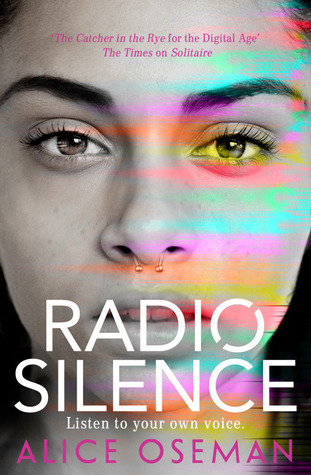
Radio Silence: Book Review

Radio Silence by Alice Oseman tells the story of Frances Janvier, a 17-year-old A-Level student aiming to get into Cambridge University. Everything she does is in aid of this goal, but her constant studying prevents her from having hobbies, bonding with her school friends, and being her true self. This begins to change when she makes friends with Aled Last, another top-of-the-class student with high aspirations, and discovers that he is the anonymous Creator of her favourite podcast. Frances' friendship with Aled helps Frances gain confidence and have a life outside of academia, but they run into problems when Aled leaves for university.

Tuesday, 23 August 2016

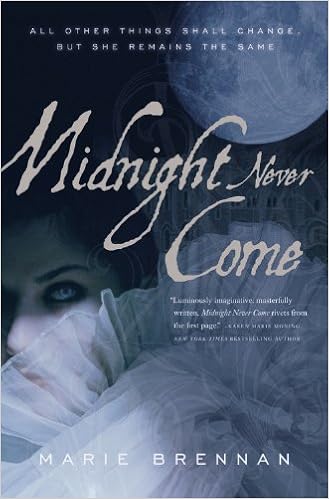
Midnight Never Come: Book Review

Midnight Never Come by Marie Brennan is a fantasy novel set primarily in London in the late 1500s, during the reign of Queen Elizabeth I - and also during the reign of another queen. Invidiana rules the not only the magical Onyx Hall which lies beneath London itself, but also all of faerie England. Our story follows two main characters - Michael Deven, a gentleman who seeks to better himself in the service of Queen Elizabeth, and Lune, a recently disgraced faerie Lady trying to win back the cruel Queen Invidiana's favour - and their discoveries concerning a pact, a curse, and the schemings of both fae and mortal politics.

Monday, 15 August 2016

The Lunar Chronicles: Book Review


So far I've only reviewed individual books but The Lunar Chronicles by Marissa Meyer is a completed series, including four novels, a prequel novella, and a collection of short stories, though I'll only be reviewing the novels. I suppose you'd class the series as science fiction, as it's set in the future and none of the plot would be possible without advanced technology, and it was because of this science fiction element that I was reluctant to read The Lunar Chronicles for quite a while. Eventually, though, I was swayed by the hype (and after all, I just can't resist fairy tale retellings).

The series focusses on Cinder, a cyborg mechanic who lives in New Beijing in the Eastern Commonwealth. Cinder's world is threatened by a deadly, incurable disease called letumosis - nicknamed 'the plague' - and by Queen Levana, the ruler of the Lunars, a moon colony of people with the ability to alter perceptions, who wishes to extend her control to Earth. Closer to home, Cinder dreams of escaping from her hateful stepmother to create her own life where she wouldn't be discriminated against for being a cyborg. But a strange twist of events leads Cinder to make some startling discoveries that (as cliched as it may sound) dramatically change Cinder's life forever.

As I mentioned previously. these are retellings of classic fairy tales, with each book focusing on a different one: Cinder is Cinderella, Scarlet is Little Red Riding Hood, Cress is Rapunzel, and Winter is Snow White. While this may make the plotlines of the individual books a little predictable, the story that Meyer creates in order to weave these stories together is rather original and wonderfully exciting. Each book also introduces a new protagonist, whom each book is named for, and who are incredibly unique and vivid. I think the characters are my favourite part of this series: they are extremely well developed, and Meyer's wonderful writing really makes them come alive. They're also all involved in some very cute romances - and not a single dreaded love triangle in sight!

Personally, I would say that Cress is my favourite of the four books - probably because she, a naive Lunar programmer with a huge imagination, may well be my favourite character;  - but I do love all of them. Scarlet is probably my least favourite; it's a little slow and takes a while to get into, and it took me a little longer to bond with the main character - a tough and fiesty farmer/pilot from France. Compare that to Cinder, which had me hooked literally from the first line (a very good thing to do, in the first book in a series). What I really loved about Cinder - both the book, and the chapters written from her perspective throughout the series - was the unique point of view she has as a cyborg with interfaces in her brain. I can't help but think that her sections must have been really interesting (and fun!) to write.

Another thing I love about this series is the example it sets to the teenage girls who it is primarily aimed at (though that doesn't mean it can't be enjoyed by anyone of any age or gender). All our main characters are incredibly talented and are not restricted to stereotypically 'female' roles: Cinder, for example, is the best mechanic in New Beijing, and I've already mentioned the career choices of Scarlet and Cress. Meanwhile, Winter remains strong, brave, and incredibly cheerful while battling with mental illness (though admittedly Lunar Sickness isn't a mental illness that exists in the real world), but this aspect of her defines neither her personality nor her storyline. Also it's nice to see that the 'fairest in all the land' is a Black girl rather than one of the white models we're so used to seeing on magazine covers. So although some of these characters might be princesses, none of them are damsels in distress, and all of them are not only believable and lovable but also great role models.

In conclusion, I HIGHLY recommend the Lunar Chronicles to:

  • anyone who loves fairy tale retellings
  • anyone who likes science fiction
  • anyone who loves books with characters that stay with you for years after you read them
  • anyone who loves a nice, cute romantic subplot
  • anyone who is looking for an exciting, enjoyable read.

Friday, 5 August 2016

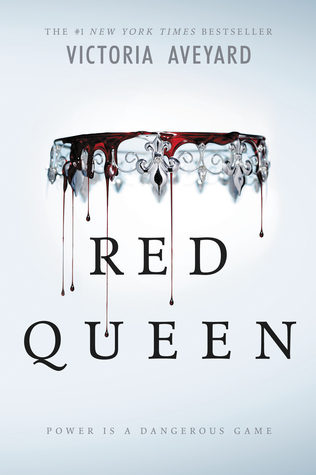
Red Queen: Book Review

Red Queen by Victoria Aveyard is a book I've had on my to-read list for quite some time. Set in a kingdom called Norta, where people with silver blood and supernatural powers rule over people with red blood, Red Queen is the first in a series of four books. The story centres on sixteen-year-old Mare, a seventeen-year-old Red from a poverty-stricken village who is doomed for conscription into a war she is sure to die in until she makes a very public discovery that she has a power much like those the Silvers possess. Unable to ignore the scandal Mare has caused, the Silver royalty decide to take her in and claim she is a long-lost Silver to cover up what they can't explain. From within the Silver court, Mare has the perfect opportunity to take down the Silvers from the inside and get the Reds the equality they deserve.

When I picked up Red Queen, I was very much expecting a high fantasy - perhaps something similar to A Game Of Thrones, though with less characters. So what I found surprised me. Despite being part of a fantasy universe, Norta has all the technologies of the modern day, including guns, television, electric lights, and security cameras. This gave the book more of a dystopian feel, which is certainly not what I was expecting, and it wasn't really what I'd been wanting either. Nonetheless, I tried not to let my personal tastes get in the way of my judgement of the book. After all, I would say it makes Red Queen a little more unique, with a world similar to that of The Hunger Games, but with the Silvers' abilities bringing more of a fantasy element to it. So if that's the sort of thing you're looking for, definitely give Red Queen a go.

As for the rest of the book, I found myself a little bored at times, and had to force myself to continue reading it. I didn't find Mare to be particularly likable and if you asked me to describe her personality, I'm not sure I could, at least not without thinking about it quite hard first. But maybe that's just because I wasn't paying close enough attention. Unfortunately, my disconnect with the narrator and protagonist wasn't an isolated issue; it meant that, in places where Aveyard built up suspense, I just didn't feel it because I didn't care about Mare and her situation enough. I didn't feel immersed in her world. Also, I found it a little too political for my personal tastes: there's terrorism, war, manipulative royals, detailed plots... It's quite a serious book (and slow in parts), but at least that means that nothing is romanticised. And speaking of romance, I at first found this subplot to be quite annoying because it seemed so predictable...

Except it didn't turn out to be predictable at all. In fact, by the end of the book I really liked how the romantic subplot seemed to be turning out (obviously, this arc is not finished; I imagine it will take many more twists and turns throughout the rest of the series).

And I'm very pleased to say that the other plotlines improved towards the end of the book too. By the last hundred or so pages, I was finally hooked; I finally cared about the characters and what happened to them. The suspense also increased hugely and, though I don't want to spoil anything for anyone, get ready for some major plot twists. Do not expect to see any of them coming.

In the end, I'd say that most of my problems with Red Queen are down only to personal preference: it's a good book, and I feel bad publicly discussing the bits I didn't like about it. But those last hundred or so pages made the last few weeks I've spent reading this book truly worth it, and I'll definitely be picking up both the sequel and the prequel (which actually sounds more to my taste than the original). I would highly recommend Red Queen to anyone looking for something similar to The Hunger Games, but if a high fantasy is what comes to mind when you read the blurb, I'd suggest trying a different book instead.

Saturday, 13 February 2016

The Redwood Rebel: Book Review

The Redwood Rebel by Lorna George, published in 2015, is the first in the Redwood War trilogy. It follows the story of Naomi, a young soldier from the land of Ffion who, after being imprisoned for four years, makes a deal for her freedom in the hopes of eventually freeing her country from the tyrannical princess leading it to its own destruction. However, it's not long before her plan goes terribly awry and she ends up not only fighting for her life but doing so in a difficult and unexpected situation (no spoilers!).

I first came across Lorna George on tumblr, where she was promoting her book before it was even published. I heard it was a book with dragons and strong female characters, so needless to say, I was very excited to read it when I finally got my hands on a copy at Christmas.

I'd like to say that I wasn't disappointed, but I'd also like to be honest. I really wanted to fall head over heels in love with this book. I wanted it to be my new favourite - after all, it has dragons and strong female characters; what more could one possibly want from a book? Especially when the protagonist is possibly one of the strongest female characters I've come across? Naomi is not only an ex-soldier but also extremely well educated and written very realistically. She's stubborn and knows her own mind and isn't afraid to voice her opinion. And she's not the only well-developed character, thank goodness. Our other protagonist is just as stubborn and flawed as she is (no Mary Sues here, thank you very much!).

The thing I think I loved best about this book was its worldbuilding. Naomi spends a lot of time with a group from another of the two continents in Ilios, the world where The Redwood Rebel is set (I won't say which so I don't spoil it for anyone), and there are a lot of cultural differences. There is a huge divide between the views and mindsets of one nation and those of the other, and that's something I'm not I've seen before. It made for a very developed world, not to mention plenty of conflict as characters from different backgrounds argue over the right way to do things. It also led to numerous discussions on consent which of course was fabulous.

So, then, you may ask: how can you possibly be disappointed with this book in the slightest?
Sure, the characters were great, but that doesn't mean I connected with them that well. There were a lot of long internal monologues which described what our characters were feeling and thinking and pretty much every reason behind those thoughts and feelings. Counter-intuitively, I felt that this not only slowed down the plot but also distanced me from the characters. I felt I never got chance to get to know them, because I was just told about them instead. I'd heard Naomi mentioned so many times, I was really looking forward to meeting her, so I was disappointed that it didn't really feel like I'd met her - rather, it felt more like I was hearing about her from a friend.

But having said that, I have no doubt that The Redwood War series will only get better from here. I still definitely recommend reading The Redwood Rebel especially if you're looking to read something with dragons in, or a progressive fantasy. I can't wait to read the next installment!

Wednesday, 17 June 2015

Things People Say When I Tell Them I’m Writing A Novel

Being a writer is part of who I am, and I don’t want to hide it, so if someone asks me what I’m doing tonight, I’m not going to tell them that I’m watching TV all night when actually I’ll be working on my novel. This generally leads to the other person asking two questions: what's it about, and can I read it? You’d think I’d enjoy hearing these two questions - hearing that people are interested in my book - (I know, me too) so here's why I don't.
What is it about?
So many things about this question make me nervous about answering. Firstly, I never know where to start. My head has been filled with the characters, settings and various plot points of this story for almost three years now. It has gone through many changes and will go through many more. This makes it kind of difficult to step back from all the tiny details of the project that I’m currently dealing with to summarise the book’s exposition for you. I always struggle with working out which bits are important and which bits you will understand without me explaining the entire history of my fictional world. As a result, my answer will either be short and vague and therefore rather disappointing (usually I just say “oh, it’s a fantasy”, and only elaborate with something like “it’s about a girl searching for her family” after a little more prompting, though that doesn't do it justice), or you’ll have to hope you don’t have anything to do in the next few hours because I’m telling you everything. Secondly, as already mentioned, I hate oversimplifying it. It gives the wrong impression (I once told someone my book is about a revolution, which it is, but it lead him to think it's a political book, which it isn't) or makes it sound dull, or like I don't want to talk about it (I do, I just don't know how to without sounding silly - a pocket watch that gives you the ability to talk to ghosts, are you serious?). On the other hand, I also don't want to end up boring the other person with all the inconsequential details, or messing up my explanation and just confusing them (which is very likely). I feel like this question puts pressure on the writer to have a good grasp of their book, which you would think they have, but in reality, (at least for me) it's just a huge mess of ideas.
Can I read it (before it's published)?
I hate this question, usually because I have to try and find a nice way to say no ("not yet" is my go-to reply). Before you ask it me, I want you to ask yourself a few questions first.
1. Why do you want to read my work? 
If it’s for a ‘claim to fame’, then please don’t ask me if you can read my book. My neighbour is apparently convinced I’ll be the next JK Rowling and wants to be able to say he read my book before it was famous. This makes me uncomfortable partly because it’s highly doubtful I’ll be as successful as JK Rowling and he really shouldn’t expect me to be famous one day just because I’m writing a book, but mostly because it implies to me that he’s actually only interested in my book so that he can have something to boast about in a few years’ time. It also disregards the fact that right now, my novel is a hobby, and getting it published - never mind it being a bestseller - a far-off dream.
2. Are we good friends? 
My book is incredibly personal to me. It isn’t just a story, it’s my imagination laid bare on the page for you to see. So I’m very self conscious about my work. If we’re not really good friends, then I’m not going to want you to read my novel. I’m also not going to want to disappoint you and tell you that I’ll only let you read it when the entire rest of the world can read it too, which puts me in a slightly awkward position. Basically, if I’m not comfortable enough to be myself around you in person, then I won’t be comfortable enough to let you read my book. If it was ready for you to read it, I'd have started querying literary agents already. So if we don't know each other that well, don’t even ask.
3. Will you be able to give me hugely detailed feedback? 
If you think that writing a book is easy, or that the books you see on the Waterstones bookshelves are word-for-word the same books that their authors wrote when they first sat down at their desks with a vague idea in their heads, you would be wrong. So lower your expectations of however good you think my novel is going to be, and then lower them some more. This is a work in progress and in need of a lot of improvements.    
As the writer, I see my story from a completely unique angle. My position is all-seeing. I know everything that is, could be and could have been in my story. To me, it all makes perfect sense. Unfortunately, my readers will not have this viewpoint, so I have to make sure everything that is important is visible from their angle too, but I can’t see from their viewpoint either. This is where I need help. At this stage, I need readers willing to give me a huge amount of feedback to help me get across what I want to get across and not miss out anything important. If you’re not willing to tell me all of your opinions of my book - what you thought of every character in every scene, your theories on their plans, how much of their backstory you’ve worked out, what confused you, what bored you, what you thought was unnecessary, what you thought was supposed to be funny but really wasn’t and needs to be removed, and, of course, what you enjoyed - then you telling me that you want to read my book is just someone else waiting over my shoulder for me to finish writing, counting on me to come up with a spectacular bestseller all on my own (not going to happen, guys). Your answer to question 2 is also pretty vital here - if I'm not certain that I can trust your judgement and you'll tell me nothing but the truth, it doesn't matter if you're willing to give me all the constructive criticism in the world.
The likelihood is, if your answers to these questions are the ones I'm looking for, you won't even have to ask to read my book, because I'll ask you - I wasn't kidding when I said I will need help with writing my book. And if I'm happy with your answers to questions 2 and 3, I might even completely disregard your answer to 1, but not the other way around.
I'd like to add that these are only my views on this subject. I'm sure there are many writers who are very private about their writing and feel rather awkward when asked about it, like me, but I'm also sure there are many writers who are perfectly happy to talk about whatever project they're currently working on, who don't worry about mis-explaining their plot or sounding ridiculous, or who will let anyone who asks read their writing. Unfortunately, I'm not one of them.

Friday, 6 June 2014

The Dragon Story

I have been reminded quite a lot about my love of dragons recently; I found a rather addictive game on my
phone the point of which is to raise dragons, I found a video on making origami dragons, and I have been promised to be lent Eragon once exams are over, because it came to light that I still haven't read it.

I fell in love with dragons when I read Cornelia Funke's Dragon Rider in year 5 or 6; I got it from the school library, and tried to read it fast so that I'd have finished it by the time I had to give it back (it was a big book), and cried after I did give it back. I believe it is the one book, or one of the very few books, I class as one of my favourites that I have not reread (that's another addition to my post-exams reading list, methinks).

So, I thought I'd talk a little about my one novel idea that actually has a dragon in it, albeit not very much. You'd think that a writer who likes dragons would have a dragon in like every single story, but apparently not. My lack of dragons makes me sad. I need to write about more dragons.

Anyway, this story started out life in a small black and red notebook with squared paper at my grandma's house when I was about twelve or thirteen. I believe it was the first project I ever took seriously (though of course, between the ages of six and ten I took my badly illustrated, badly handwritten, badly stapled together books very seriously - until I got bored of them a couple of hours after starting them).

What will from here on in be referred to as The Dragon Story was a fantasy story (naturally), though it didn't have a name and still doesn't now. I remember reading an extract out at my school's creative writing club (which I had only just joined), thinking it was brilliant - and looking back, I completely understand why the older students struggled to compliment me. It began completely unplanned - even as I wrote the first lines at my grandma's house I'd hardly even thought about it - and when I did start planning it partway through, the plot was over-the-top, carried by weak characters with few motives, who lived in a world that had no history (although it did have a map that I slaved over for hours and hours and have since lost the original of, so I only have bad photocopies).

The map shrank in the wash.
I recall one particularly melodramatic scene inspired by my favourite song (I Was Only Dreamin' by Bryan Adams - no longer my favourite song, but still close to my heart), in which my character fell asleep on the beach and woke up to find his lover gone - and he comes to the conclusion that she was merely part of his dream, and falls into despair until she reappears a few minutes later, much to his delight. Does that portray the levels of bad we're talking about here?

Naturally, my protagonists were going to win against the bad guys (who had a stupid, and stupidly long, name made up of a load of French words stuck together), and the two characters mentioned previously were going to get married and live happily ever after.

Good start.
So where does the dragon come into this? And why am I writing about this story that I abandoned when I was thirteen?

To answer the first question, I shall have to tell you a little about the plot. The first part of the story involved my characters fleeing literally to the other side of the world from the bad guys, until they found help in the form of an elf friend of one of theirs, who advised them to go to Wise Dragon (creative name, I know), who lived in a cave under a mountain which he never left (nice to know that my one dragon is an awesome, fearsome dragon). I'm not even sure my characters ever got as far as Wise Dragon except for in my plan, but Wise Dragon was going to reveal a few secrets about my characters' identities and send them off on their noble quest - he was rather an important plot point.

To answer the second question - I have a bit of a habit of merging numerous story ideas; so, this story has become embroiled in a rather large network of sequels and companion novels to Barnabus' Balloons which incorporates a great number of previously-thought-of, sometimes abandoned ideas, and a few new ones. Therefore, this story now takes place in the same world - and in some parts, the same queendom - as Barnabus' Balloons, but some years after the end of it, and also involves the same enemies as it, which no longer have a ridiculous group name. Basically, this particular link to the companion novel network (which may perhaps one day be something akin to Terry Pratchett's many, many Discworld novels) stemmed from my desire to replace these evil-for-the-sake-of-being-evil antagonists, and "hey look, I already have some more realistic villains with more plausible motives, why not just borrow those?" 

As I am mostly focussing on Barnabus' Balloons at the moment (apparently my concentration levels have increased from my days of badly illustrated, badly handwritten "books"), The Dragon Story is currently little more than a couple of initial chapters and a vague plan, but I do know that it will still involve Wise Dragon (who, unlike the antagonists, will keep his name, I imagine) and the plot will still revolve around a journey however the ending will not be as happy as my thirteen-year-old self intended. :)

Monday, 31 March 2014

Keeping The Ink Monsters Happy

The teacher who runs my school's creative writing club gave me a picture of a moomin because I won't be able to go to the creative writing club when I'm at uni. It was the last writing club we'd all be likely to attend together due to study leave, exams, etc (and even then, we still weren't all there).
 
 
She made me promise to carry on writing, and I will because the ink monsters won't go away that easily (but ssh, you mustn't tell anyone about the ink monsters, they're secret).
 
I'd like to say that I created this blog in order to fulfil this promise, but I created this blog yesterday and made the promise earlier today, and apparently time just doesn't work like that.